


Mark's Bicentennial
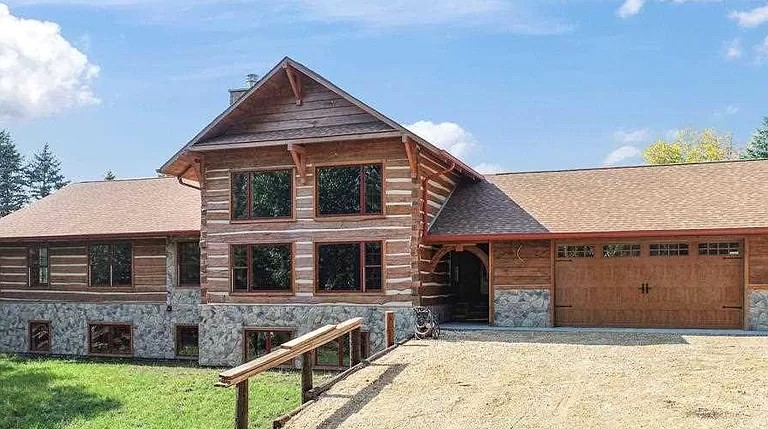
Mark Johnson’s restored home in Minnesota. The portion on the left is the bedroom and is made from the log house that was in Denmark and the two story great room was made from a log barn.
Submitted By Mark Johnson
Editor’s Note: Mark Johnson is a graduate of the Denmark High School Class of 1970 who has spent the last fifty years restoring log homes. The house his grandfather lived in that is referred to used to stand on North Wall Street on a site now used by United Cooperative as a parking lot. We thought it was an interesting story to share with our readers.
In 1975, I came across an article in Mother Earth News about a young couple building a home out of an old barn without taking out a mortgage. Not knowing much about building anything but pole barns and even less about financing, I was intrigued by the idea and soon found an old barn to disassemble myself. Little did I know it was the beginning of a career recycling, repurposing and reusing old material to build new homes.
I had dropped out of college to pursue this idea. My grandfather, so displeased with my decision, had offered me $2500 (close to $16,000 in today’s money) to finish and graduate. Being newly married, I wanted to build a home for my new bride, so I struck a deal. Give me the money, I’ll use it as a down payment for land, and I’ll finish my degree after I complete the house. He agreed in 1976 which is the start of my bicentennial story.
We purchased 25 acres on a lake near Mankato, MN, with that money We only had a half-ton van to our name, so I found an old 1947 International pickup for $50 and started hauling the barn wood to our new building site. Work continued from spring to summer, but we barely got the shell enclosed by winter. My father-in-law had given us his camper to live in during the summer. Still, with winter coming, we decided to wrap it in hay bales and tried to heat it with electric space heaters, only to overload the electrical system and nearly burn the place down on a cold January night. It was time to move in.
We bought a cast-iron cook stove, purchased insulation to stave off the cold, and moved into the basement. We had an outhouse, no phone line, and no running water. The nearby farmer graciously let us take showers in his basement, gave us water, and sold us milk straight from his cows. We thought we were in heaven until the following year, when our son was born. When the outhouse filled up with Pampers, my wife put her foot down, and I went to the bank to get our first of many loans so we could drill a well, get indoor plumbing, and a few other “luxuries”. In the meantime, building continued using salvaged and reclaimed materials as best we could find them without the internet.
Our search was fruitful. We salvaged Maple flooring from an old church, marble countertop, and tile from an auction, oak doors and some windows from the college where my father-in-law worked, more windows and a patio door from a neighbor, and other windows from remodeling jobs until we had 8 different brands in our home with the best being windows from the St. Peter hospital that were actually made in Norway. We found timbers and barn siding from old barns as well as their stone foundations, which we turned into a chimney and retaining walls.
The little barn we had started with was added on to four times over the next 40 years. Once to make bedrooms and bathrooms for our two children, another to make a family room for all of us, an attached garage, and a main-floor bedroom when we could no longer climb the spiral stairs to the loft bedroom. It’s had three roofs in its life, the final being a steel roof I found sitting in a derelict barn, waiting to be used for the first time.
Before I was finished, my grandfather had passed away, but my father reminded me of my promise to him. I finally graduated with a degree in Business Administration and Construction Management. Now that I had the credentials, I started my construction business. I named it Terrasol Restoration and Renovation after the Latin words for Earth and Sun because I thought people might want to build more sustainable homes with passive solar or earth-sheltered designs. In reality, I think folks wanted to forget about the oil embargoes and gas rationing of the 70”s rather than remember them.
I started Terrasol Subdivision to reflect my goals as a builder so my first spec home was a passive-solar and earth-bermed design. It wasn’t as well-received as I hoped, and it took longer to sell than we expected. With my lesson learned, for the next project, but with my green spirit undiminished, I wanted to move a home and renovate it instead of building new. I placed an ad in a local shopper magazine to find such a home and as luck would have it, someone called to ask if I wanted to buy an 1880 log cabin.
A log cabin wasn’t what I had in mind, but I was so intrigued by the idea that I put an ad in the Minneapolis Star Tribune to see if anyone was interested in buying it. My phone rang for days. I considered my test market a success and purchased the cabin. This was the first of more than 25 cabins that I would disassemble and restore over the coming three decades.
The pioneer log cabins were often too small to serve as modern homes, but since my own home was a converted barn, I explored the idea of converting them into modern homes. As our experience with the old log cabins grew people with newer log homes reached out, and we started work on restoration of their homes along with new construction using old barns and log cabins.
Today I have a log home I built from my grandfather’s log home that I salvaged near Green Bay, WI, and a log barn from Minnesota near Montgomery. I call it Sophus’ house in his honor and in gratitude for the seed money that enabled my life’s work. Inside, you’ll find reclaimed wood from several barns, beams from a Howard Johnson Motel and a bank, timbers from a bar in Eveleth, MN, and old dressers that we converted into vanities.
It’s for sale right now, but I’m using the lot next door as outdoor storage for miscellaneous building materials I've acquired over the years. I finally realized that no one would buy it with a lumberyard as a next-door neighbor, so I decided to build another home and use it up. I wanted this last home to be a barn home like the first one in 1976, with a passive solar design and all the things I wanted in my first home but couldn’t afford. I had a barn chosen near Janesville, MN, but as I started working on the budget, I realized the cost of building what I wanted was so high that I had to give up the barn home in favor of a more affordable home. Unfortunately, today, as with the first spec home I built, not many people value the same things I do in a home, so I’m forced to meet consumer demand instead of what’s best for the earth.
My fifty years in the building business have taught me many things, and with my retirement resting on these last two homes, I’ve become painfully aware that my ideals finally must be tempered by reality.
Retirement is on the horizon, but I’d be far happier to hang up my tools if I knew that my legacy would continue. The search for someone to mentor and for someone to ultimately pass the business on to has been, hasn’t been as fruitful as I’d like.
Consider this article a plug for Earth Day and my advertisement for a unique business in search of a next-generation owner. Good pay. Rewarding work. Must enjoy log homes and barns.
Let's see if anyone responds.
If anyone would like to reach out to Mr. Johnson, please contact The Denmark News for more information.
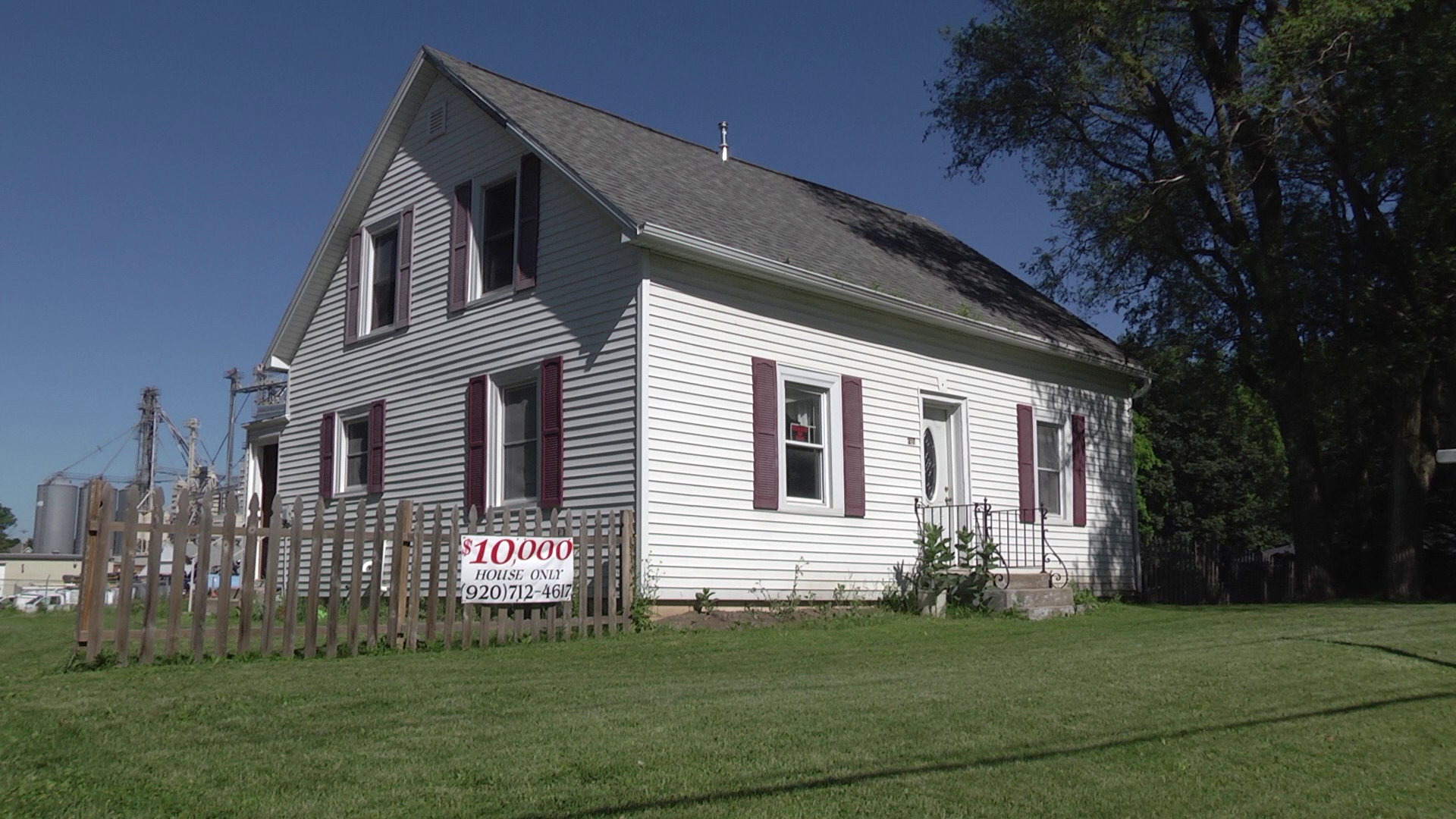
The former home of Sophus Johnson that used to sit along North Wall Street before being deconstructed, moved and reassembled by his grandson Mark in 2017. (Photos courtesy of Mark Johnson)